
Is it MS progression?
Are you noticing small changes to how you’re able to do things? Even if your MRI isn't showing changes, changes to your physical and cognitive abilities could still be happening.
Rethinking stability in MS
Brain fog, muscle weakness, or balance issues: maybe you’ve mistaken them for signs of aging or a bad day rather than your MS. It’s an easy mistake to make, especially when your MRI isn’t showing changes and your relapses are under control.
Now it’s becoming clear that for MS to be truly stable, relapses, MRI activity, and cognitive and physical changes, known as disability progressionA gradual increase or worsening of physical symptoms, cognitive symptoms, and/or fatigue over time., must all be under control.
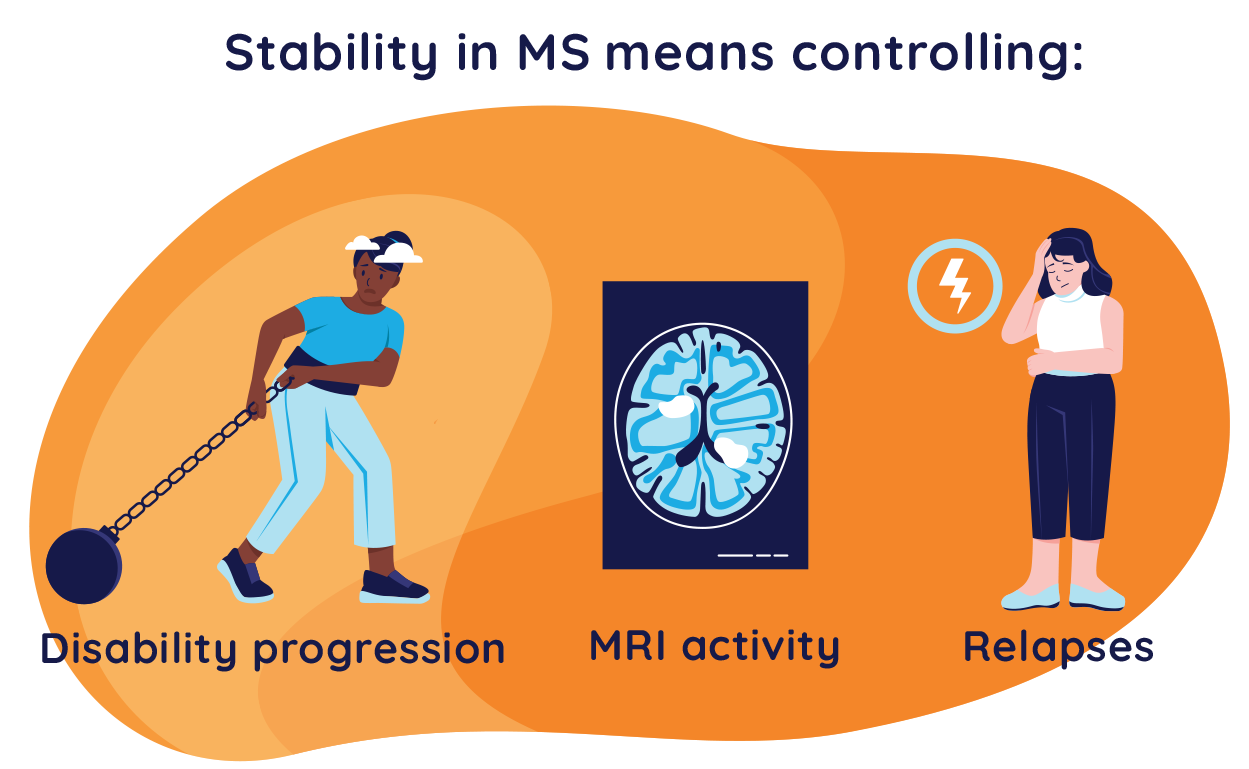
Disability is more than mobility
When people think of MS, many think about physical and mobility issues like using a cane or wheelchair because the impact of these changes can be obvious. But what about changes to memory and focus?
When someone with MS is experiencing more cognitive challenges or muscle weakness, it could be a sign of disability progression, and it could mean your MS is changing.


Disability progression
Noticing signs of disability progression
When daily challenges add up over time, it could be a sign of disability progression. Here are a few ways disability progression can affect normal, everyday activities:

Struggling to find the right words

Bowel and bladder issues

Difficulty walking long distances

Being unable to exercise the way you used to

Forgetting if you already did something

Tripping or losing balance unexpectedly
Signs like these can be easy to ignore or attribute to something like aging. But if you catch yourself making changes to how you work, socialize, or perform physical tasks, it could be because of your MS, so it's a good idea to mention them at your next appointment.
"I was beginning to make some mistakes at work, this was part of the reason I felt I had to stop."
—Female, United Kingdom
Are you noticing changes to your abilities?
You may also think being able to cope with symptoms means your MS is stable. However, when routine tasks are harder than they used to be, it could be a sign that something else is going on with your MS.
Do you have to park closer to stores or your doctor's office? Or stop work earlier than you used to? Maybe someone close to you has noticed you making changes because of your MS. Maybe it's in the way you think, talk, or walk. It’s important to keep track of all changes.
These changes happen very slowly over a long period of time. Since it may be hard to notice them, it can be helpful to check in with yourself once a season and write down what might be different in your day-to-day life.
Watch this video to see how Anne discovered her MS was changing:
Your commitment to tracking is more important than the frequency
Imagine that you inflated a balloon and took a picture of it throughout the month




If we look at any 2 consecutive pictures, it can be hard to notice a difference.

But if we look at just the first and last pictures, the change is far more obvious.

What can be done to help address disability progression?
Here are a few things that doctors may recommend to help people living with MS deal with cognitive and physical challenges:
-
Rehab led by a speech, occupational, and/or physical therapist
-
Therapy, meditation, mindfulness, and/or other mental health practices
-
A healthy diet and regular exercise
-
Support groups that connect you to others with MS
Care partners: What should you do when you see changes?
Caring for someone with MS means you are often the first one to detect changes that they might not notice themselves.
While it may feel awkward to speak up, it's important to have honest conversations about the changes you notice so that your loved one's doctor can better understand if their MS needs are evolving. It can also help you build a stronger relationship with the person you care for.
Consider writing down examples and concerns as you see them to refer back to during conversations. If you're unsure about something you think might have changed, remember that signs of disability progression can be hard to notice.
"Somebody living with MS might not notice the cognitive problems or changes in emotions they are experiencing, but care partners are able to pick up on them."
—AM, Chief Mission Officer, Patient Advocacy Group